For my birthday and in support of my healing, I invite your creative contribution and participation, friends… Please read the invitation at the end of this post — even if you don't read these reflections.
The Threshold
On September 2nd, I enter a week-long ritual celebrating 53 years circling the sun — one ritual within concentric circles of ritual already flowing through my days and nights, my blood and bones, as I prepare this body for a bone marrow transplant and a lengthy recovery. This birthday feels less like another gradual step in maturity and more like a watershed transformation in my life, and in my bones.
The dis-ease I'm navigating is a bone marrow and blood disorder. Chinese Medicine understands the body's waters — blood, fluid, the unseen tides beneath the skin — as living current, tended by a whole constellation of organs working together rather than any one alone. To heal is to restore harmony between movement and stillness, warmth and cool, nourishment and release. This water is not only mine. It is kin to the rivers, the rain, the oceans — one breathing water-body, earth-sized, in which no single drop is separate. Before we were anything else, we were water. Life itself first stirred in ancient seas, and each of us once floated in our mother's womb, carrying — even now — a chemistry similar to seawater in every cell.
My contemplation on this birthday turns toward the water element — the fluids of our earth body — and what it means to nourish our collective immune system, and the global cycles that sustain life, amid the Great Unravelling.
Water as Teacher
The water element has long been my teacher. As a Buddhist Taoist*, I recognize water as a symbol of flow, effortless action, and humility. Water is the most yin element in an overly yang world. To accept change with grace rather than waste energy fighting reality — this is an expression of water.
I have long held a daily inquiry: when I let go of what do I have to do? — and the orientation of a separate self — what is doing, in this moment? What is flowing through my Being, effortlessly, and through the whole universe? What is unfolding in the field of mutual emergence?
Somatically, my inquiry has long been: what nourishes the fluidity and flow of this body? How is remembering the fluid nature of my earth body — 70 to 90 percent water — medicine for conditioned habits of hardening, bracing, pushing, and hypervigilance that are symptoms of the separate self?
I see it everywhere in modern life: necks and shoulders locked forward toward screenlight that never asks us to look up. The sitting — hours of stillness mistaken for rest, while the fascia quietly stiffens around a body designed to move. The hurry that views presence as inefficiency, so breath stays shallow and the diaphragm never fully releases. The suppression of feeling — grief, rage, longing — held in the tissue because there was no time, permission, or safety to let it move through. The isolation from touch, from skin against skin, from the co-regulation our nervous systems evolved to share with one another. Even the light itself — artificial, constant, indifferent to the sun — disrupts the rhythms that water and hormones once moved by.
Each of these is a small argument against flow. Each instructs the body that hardening is safety, that bracing is protection, that striving and controlling are survival. Through presence, somatic inquiry, and listening to our internal waters, a greater freedom and effortlessness in our soma and our mind can be restored.
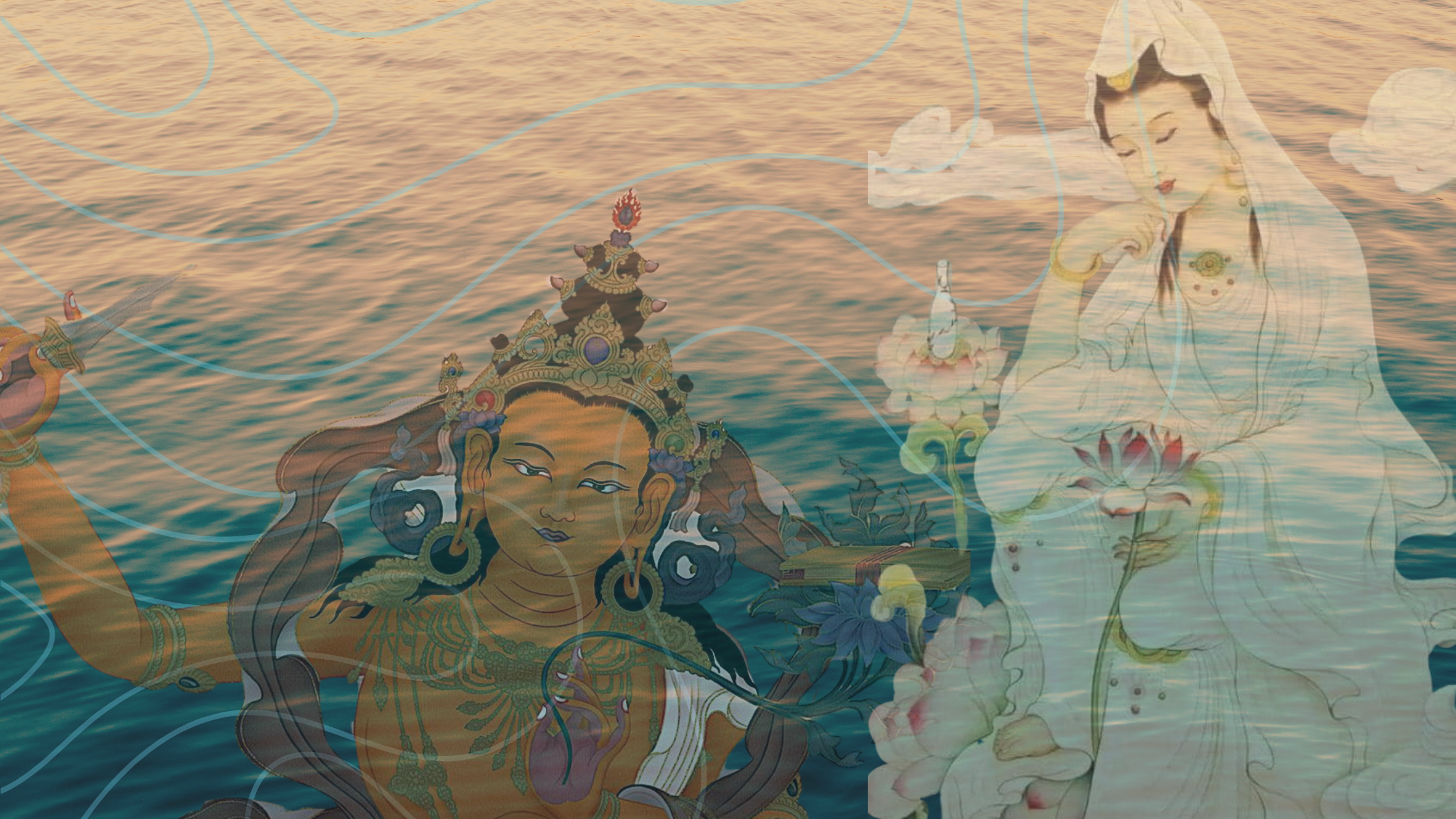
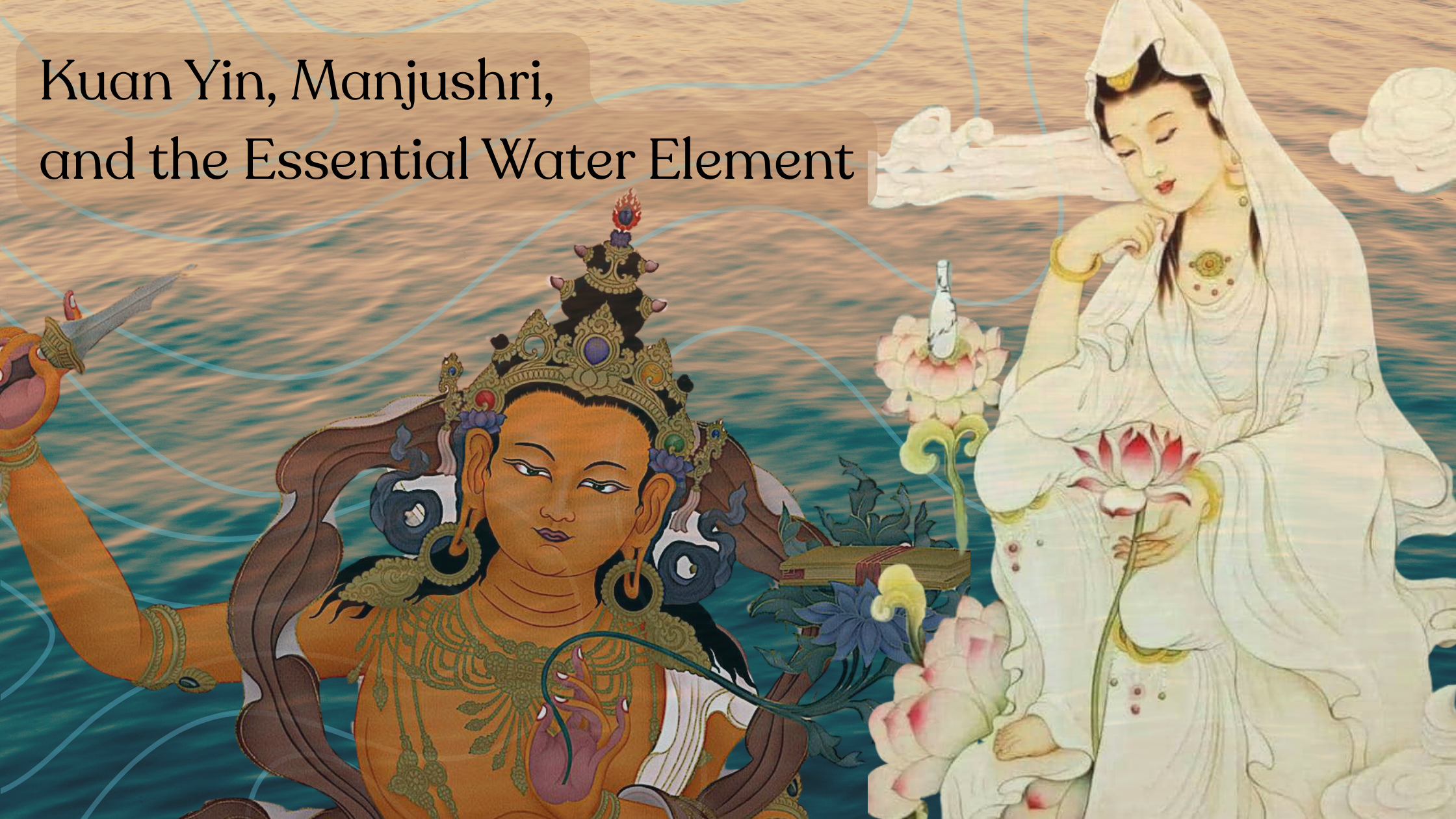
Sometimes water moves gently — like the spirit of Kuan Yin, softening us slowly and releasing us into tears — but water is also a powerful, active force: the current that dissolves what no longer serves. Like a flowing stream, or Manjushri's sword* — the blade that cuts not to wound but to wake us up — it wears through obstacles by simply continuing to flow, unrelenting, the way a thousand-year-old river erodes stones in its path without seeming to move at all.
Sometimes water rises without warning — the way Hurricane Helene sent rivers over their banks and reshaped whole landscapes, and lives, including my own. In this experience, it was my ability to let go and flow that saved my life.
While my home practice is Zen Buddhism, I've long been inspired by Vajrayana teachings. In Tibetan Buddhism, there's a term called drala — "beings or places that cut through one's habitual chain of thoughts." It's the moment the ordinary cracks open and something true gets through.
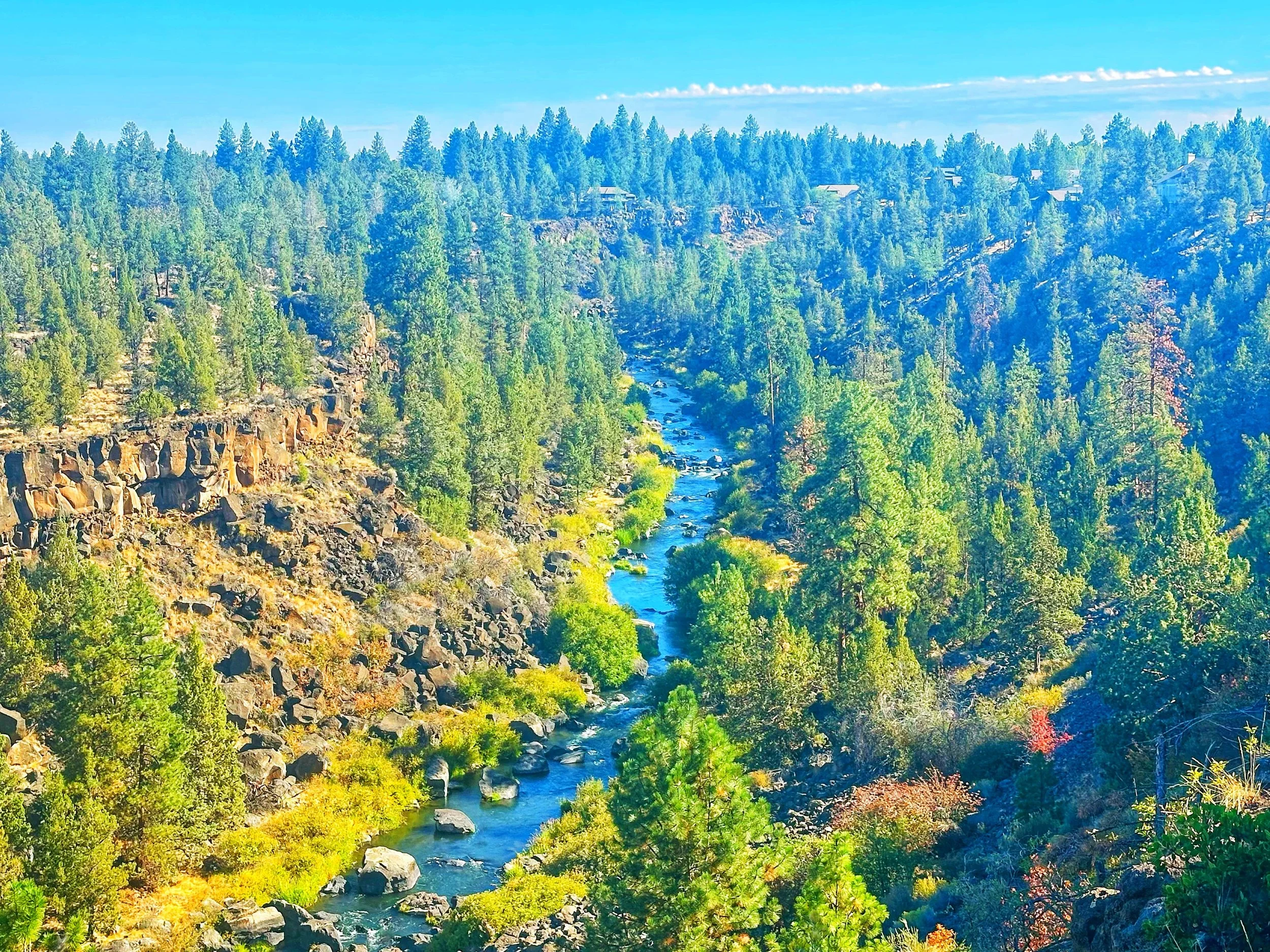
Water, I've come to feel, is one of drala's most legible faces. Drala arises when we stop battling our own experience — when we meet what's actually here instead of bracing against it. Water does exactly this; it doesn’t fight the shape of the riverbed, never resists the stone in its path. It simply continues, taking the way that's actually there. This is why water cuts through without aggression — the same non-resistance that lets drala cut through habitual thought. To touch a river, to stand in rain, to immerse fully in the sea, is not merely symbolic. It is elemental contact with the very current drala names in us.
Respecting and honoring the current of life, and ourselves as part of it — how can we know ourselves as the water that clears the channel, in a culture designed to interrupt it at every turn? In an overly yang world, of collective anemia and amnesia, what habitual patterns of thought are ready to be dissolved by the flow that unclouds?
Remembering Through Water
How do we remember to hold the water element as a sacred teacher? What is the global water element asking of me and of us?
The fluid inside and around our cells has a mineral balance strikingly similar to ancient seawater. Every hydrogen atom in every water molecule in our bodies formed within the first few minutes after the Big Bang, about 13.8 billion years old. Maybe it's the gratitude we bring to the ritual of drinking water, or the slow sensuality we bring to bathing; maybe it's the exhilaration of immersing in spring water as it wakes something primal up in us. Maybe it's bringing awe to the experience of rain, or the freedom of movement in our serpentine spine and hips as we dance; maybe it's just pausing to not take for granted when we turn on the tap — all of it reminding us that water is sentient. It is a living presence. Water is not a resource we get when we turn on the tap — it is 4.5 billion years old. It is a wise spirit. It is Life.
As Above, So Below
We know that "as above, so below" — so let's follow the thread between personal and collective immune systems.
Through the polycrisis we face, more people are waking up to the imbalance of the water element in our world today. Flood or drought, this El Niño year has made the extremes hard to ignore. In the seven weeks since I left Hawai'i for the mainland, we've had to pick up and move three times because of wildfires in the areas we were traveling through; additionally, the two retreats I was conducting in Big Sur were cancelled by the Timber Fire. Meanwhile, our neighbors in Hawai'i — where we'd been setting up a home before this cancer diagnosis — experienced the biggest hurricane and downpour they have ever seen. We all just bore witness to a tragic flash flood in Nepal, caused by a glacier collapse that scientists say climate change likely helped to trigger.
The Prayer
How much reverence can we hold for the living spirit of water? What does the water element have to teach each of us, and to us collectively, if we listen more radically and devotionally to our earth body — within and without?
As I immerse in healing, I hold this prayer: May years of practice uplift my courage to move in harmony with life… to be awake to the current that directs essential well-being — both mine and our collective essential. May I let the flow that unclouds carry me past delusion. May my internal waters be in harmony and balance. May this healing ripple outward, touching all beings and this whole water-planet we share.
My Ask, for My 53rd Birthday
This prayer takes shape, this year, as a ritual I'm inviting you into.
For the week of September 2nd, I am engaging in a ritual — of immersing in water, of dance (my favorite way to celebrate the fluidity of the body), and art-making, as one step in ongoing rituals of healing.
As I cross this threshold, I invite you to contribute in two ways:
1. Contribute to my altar. Send images of water, or of Kuan Yin, Manjushri, or deities from your own tradition, for my altar — and if you're moved to, share mythical wisdom from your own tradition about the blood, bone, and fluids of the body — or of the body we all share, the earth herself.
2. Share any music or soundscapes for my dance journey — and maybe I'll share some of this music back with all of you.
One of my dearest friends and co-facilitators, Nina Simons, once shared this with me, via Oscar Miro-Quesada:
Consciousness creates matter. Language creates reality. Ritual creates relationship.
This is one way we can be in relationship — in prayer together. There's a simpler invitation too, open to everyone, whether or not you send anything back: let your relationship with water become devotional rather than habitual this week. Some will meet this by immersing fully — swimming in open water, feeling water wash away what no longer serves. Others will meet it by restraint — a shorter shower, a tap turned off a breath sooner, water treated as something borrowed rather than owned. Both are the same prayer, spoken differently: attention, where there was once only habit, in support of our collective immune system.
How to Participate
Please send your contributions to deborahedentull@gmail.com, where my assistant can help me receive them. Thank you for being part of the circle of reciprocity that is genuine community.
If you feel called to contribute directly to my treatment, you can learn more in my GoFundMe here.
*Zen carries Taoist DNA at its root, as Japanese Zen evolved from Chan Buddhism which evolved from Taoism.
*Kuan Yin is the bodhisattva of compassion in Buddhism, often depicted pouring healing water from a vase, as one who hears the cries of the world and responds with boundless compassion.
*Manjushri is the bodhisattva of wisdom in Mahayana and Vajrayana Buddhism, depicted holding a flaming sword raised above his head in his right hand.